Pages

Friday, 7 March 2014

One man, two votes! Georgian houses of Dalston Terrace to be demolished.

The Chair of Hackney's Planning Committee, Councillor Vincent Stops, used his casting vote on a tie break to approve demolition of the surviving 13 Georgian houses in Dalston Terrace last Wednesday 5th March. It was democracy inaction, and resonant with deja vu.


The Council's officers reported that there had been 785 written objections to the planning application, by  Hackney's development partner Murphy, to demolish the 200 year old houses. You can read OPEN's objections here.  Hundreds of local people, including Dalston architect Lisa Shell, objected as well as three local Conservation Area Committees, The Hackney Society, the Spitalfields Historic Buildings Trust,  the East London Preservation Society, the Heritage of London Trust, SAVE Britains Heritage, the Victorian Society, the Georgian Group and The Society for the Protection of Ancient Buildings(SPAB) . All urged restraint and that Hackney consider the issues further. But, with Hackney and Murphy's haste to proceed, there was to be no stay of execution.


This video shows the appalling neglect and vandalism of the houses by the owners and, despite its promises to us, Hackney's neglect and indifference to their fate and its community's views

The Council officers report to its Planning Committee was telling. Hackney pleaded it own negligence, in failing to maintain and protect the houses which had  "been in an unheated and damp condition for years", to explain why they are now incapable of repair and redemption. Hackney had in effect, despite the lofty public pronouncements of its politicians, and numerous officers' reports over many years, just stood by and watched the houses decay. It had even, at public expense, demolished three of the houses itself and dressed others in funereal black paint, whilst they were in private ownership, .


In responding to each planning objection, Hackney's officers sided with the developer, Muphy's, opinion about the irredeemable condition of the structures, even against the advice of Hackney's own appointed independent expert, Alan Baxter LLP.


Despite Hackney's public commitment to a conservation-led scheme, in which the design is subservient to the buildings heritage, it is clear that the plans are commercially led, a demolition and new-build scheme, in "heritage likeness". Little value has been put on the heritage, cultural and economic value of restoration.


Murphy are to lease the new ground floor shops back to Hackney, which has specified 'open plan'  shops " designed to appeal to  range of potential occupiers". (Who are they? Ed.)   The degree of structural intervention to create such "open plan" shops, Alan Baxter LLP advised, would cause the buildings to collapse. In Hackney's eyes traditional shops - like those of  Broadway Market, Columbia Road and Covent Garden - have no place in Dalston Lane. No options appraisal appears to have been carried out - an oversight with grave consequences.


The ground floor interior of one of the 1807 houses that Murphy would rip out under the 'conservation led" scheme.

Even if we were to keep the traditional shops, Hackney responded, "the same conclusions would hold true"  because, Murphy's engineers say, the poor quality of Georgian construction and inferior bricks are inherently weak.


But Hackney's own expert, Alan Baxter LLP had  advised that "With regards to the brickwork strength argument, this is flawed. It is not appropriate to judge buildings of this age and type as if they are modern construction" . This view was supported by the forensic analysis of a SPAB Fellow, and the internationally recognised Morton Partnership whose opinion was that "some buildings...still have a very good potential to be retained in their entirety and brought back into use with sympathetic restoration and repair". The officers denigrated their views - "The position of the Ed Morton and Alan Baxter reports with regard to brickwork durability is not accepted."
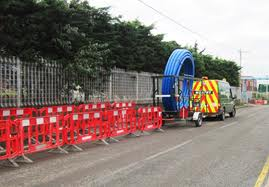

Murphy are know for "breathing life into infrastructure projects" but, sadly, not Georgian buildings.

When Murphy's structural engineer was asked whether he personally, or any member of his firm, had any conservation accreditation at all to support their judgment, he was unable to reply affirmatively and the Committee Chair stepped in to forbid further discussion of the issue. We are also  not aware that Murphy's architects had any such accreditation either. And so the houses must come down and be rebuilt with new bricks and modern construction techniques to create a replica "heritage likeness" scheme.


Although officers reported that the demolition and new build scheme will have "some construction cost savings", any affordable housing nevertheless remains "unviable" because, they advised, the developer must (as in all these schemes) first recover a 20% profit. Despite Committee members questioning, the officers failed to report and advise them that, if everything is demolished, the new build scheme could potentially attract a developer's windfall of 20% VAT exemption. The Council's manager had told OPEN members personally that he "argued strongly against any affordable housing to ensure the development would be of the highest quality."  Early written reports appear to show that they had ruled out any affordable housing even before any viability test had been undertaken.


"Dalston Lane - Summer Day No1" by legendary Dalston painter Leon Kossoff, who features in Emma-Louise Williams' film "Under the Cranes" and on BBC by Iain Sinclair who referenced Hackney Council's vandalism   

At the conclusion of the debate the Committee Chair plus 3 members voted in favour of demolition, and 4 members voted against it. The Committee Chair then used his casting vote in favour. Motion carried for demolition. Job done.


The Vandals: an eastern Germanic tribe which earned notoriety by sacking Rome in the 5th century, but which was later defeated by the Goths.
Vandalism: the gratuitous anti-social destruction of the environment and artistic creations.
Municipal vandalism: the destruction of our cultural heritage by corporate ignorance, deliberate neglect, greed and vanity, all in the name of regeneration and progress
.

Wednesday, 5 March 2014

Dalston's Georgian houses hold their breath.

Tonight, Hackney's Planning Committee will consider and decide, in public, an application by the Council's development partner, Murphy, to demolish the thirteen surviving 200 year old Georgian houses in Dalston Terrace. You can attend the meeting tonight at 6:30pm in the Hackney Town Hall.

We have several objectors registered to speak. You can read our written objections here.


The house were built between 1807 and 1830, and had shops fronts built over their front gardens in about 1890

Murphy, which entered a development agreement with Hackney on 27th June 2013, will tell the Committee that implementing the approved "conservation led " scheme will cause the buildings to collapse, and so they should all now be demolished. Murphy's structural engineers had previously advised that the scheme was possible, when the Committee granted planning permission in August 2012, but had changed their opinion by the time of the development agreement with Hackney on 27 June 2013.


This video shows the appalling neglect and vandalism of the houses by the owners and, despite its promises to us, Hackney's neglect and indifference to their fate and its community's views

Last December Hackney authorised Murphy to commence demolition without planning permission. When we challanged Hackney, Councillor Nicholson admitted that the demolitions were unlawful and they were ceased. Muphy's current planning application is to resume the demolitions.

It has now been revealed that, when the demolitions commenced, Hackney was already in possession of a report by independent expert engineers, Alan Baxter LLP, advising that the main 200 year old houses could be saved if the extent of structural alterations proposed for the houses were reduced - namely, without creating the proposed "open plan" shops

The ground floor interior of one of the 1807 houses that Murphy would rip out under the 'conservation led" scheme.

Since Murphy's application for wholesale demolition, local architect, Lisa Shell, has commissioned a further investigation by the Morton Partnership, an internationally recognised firm of conservation engineers. They advise that, with the use of specialist techniques, not only could the "conservation led" scheme be implemented as designed but also that all, but one, of the thirteen surviving Georgian houses could still be saved.


Hackney's funereal dressing of black paint over the graffiti on the Georgian brickwork and renders. A reminder of the charred remains of the nine buildings burnt down in Dalston over recent years and all on "development opportunity" sites.

The application to demolish the houses has attracted controversy, and a huge number of objections from local residents as well as from The Hackney Society, three local Conservation Area Committees, The Society for the Protection of Ancient Buildings, the Georgian Group, SAVE Britains Heritage, The Spitalfields Historic Buildings Trust, the Heritage of London Trust, the East London Preservation Society and others. We are extremely grateful to them all for their interest and concern.


The Georgian houses of Dalston terrace have had a troubled history. Due to the indifference and neglect by the owner, Hackney Council, only two of originally sixteen businesses remain in occupation and Hackney already demolished three of the houses in 2007 when it declared a "conservation led development scheme". OPEN has always campaigned to save the houses which represent the some of the last surviving fragments of Dalston's historic development and character.

You are entitled to attend the Council meeting tonight to witness democracy inaction.
 
 
The Vandals: an eastern Germanic tribe which earned notoriety by sacking Rome in the 5th century, but which was later defeated by the Goths.
Vandalism: the gratuitous anti-social destruction of the environment and artistic creations.
Municipal vandalism: the destruction of our cultural heritage by corporate ignorance, deliberate neglect, greed and vanity, all in the name of regeneration and progress
.

Thursday, 27 February 2014

Dalston Terrace - OBJECT NOW to Hackney's recommendation for total demolition. Wednesday is too late!

Next Wednesday, 5th March, Hackney's Planning Committee will consider its Council officers' recommendation that sixteen Georgian houses in Dalston Terrace should be entirely demolished. Our historic buildings are irreplaceable. The existing damage to the houses is bad enough. Their total loss would be unforgivable. It is not too late for you to object - click on this link.  (...and see below - Ed.).

You can read OPEN Dalston's objections here


The old 1807 and 1820s houses in Dalston Lane, with modern development behind.  (c) Mooneyphoto

The few surviving 200 year old houses in Dalston Terrace represent the history, the character and the identity of Dalston's present and past generations. They represent the spirit of the place. Despite the neglect and indifference of the owners, we have fought long and hard to see the restoration and re-use of these houses (See page 72 - Ed.)  We will not give up.


This video shows the appalling neglect and vandalism of the houses by the owners and, despite its promises to us,  Hackney's historic indifference to their fate and its community's views 

In August 2012 Hackney's Planning Committee were advised that the facades and shop fronts could be retained and restored, as well as having 44 new flats built on the back. Its' members voted for a 'conservation led scheme', which required the retention and restoration of the facades and shop fronts Yet all the experts now realise that if the developer, Murphy, implements the present designs, the buildings will have to be entirely demolished.


Early this year Murphy started demolishing the backs of the houses with Hackney's authority. It was unlawful, as they admit, and we stopped them.

The present designs include creating "open plan" shops. This would involve demolition of ground floor structural walls and would probably lead to the facades total collapse. That is why the developer, Murphy, has now applied for permission to demolish everything. But those designs are totally unnecessary - shopkeepers have been trading from the Dalston Terrace houses  without "open plan shops" for over 100 years. 

                        
                The ground floor interior of one of the 1807 houses planned for demolition (c) Mooneyphoto

Last year the Council's appointed independent expert conservation engineers, Alan Baxter Associates, who reported that, with care, there is potential for some of the surviving 1807 and 1820s Georgian houses to be reused. We think that only one main design change is needed. Don't create "open plan shops". Most of the existing structures can then be retained, repaired and reused. And new flats can also be built at the back.

 
If Hackney's Planning Committee refuse permission for total demolition Murphy will have to amend its designs by not creating "open plan shops". It could implement the existing planning permission, reusing as much of the structures as is reasonably possible, in a "genuine conservation led" scheme ie one in which the scheme is subservient to the buildings, rather than destroying them.


Retention of the historic houses of Dalston Terrace is a requirement of the Dalston Area Action Plan, which was approved by the Government Inspector and adopted by Hackney's full Council in January 2013. It states, in summary, that  "Existing buildings and open spaces of historic or architectural merit must be conserved... features will be protected and enhanced in relation to....the conservation-led regeneration of the terrace extending from 46 to 86a Dalston Lane..appropriate contemporary design is possible which compliments the restored elements of the Terrace"

Demolition would also be contrary to the Council' policies as landowner, as expressed in The State of Hackney's Historic Environment "Safeguarding  historic physical asserts is a key element in the Council’ regeneration programme and is a proven and sustainable strategy.”

Our objection is not to do with the politics, deception, vanity and greed on display -those are not planning considerations. It is about the value and public benefit to our local culture and identity by conserving historic continuity. It is about Dalston.

WE URGE EVERYONE TO OBJECT TO THE DEMOLITIONS. MAKE YOU VIEWS KNOW TO THE COUNCIL BY CLICKING HERE


Saturday, 22 February 2014

Hackney is brilliant! (Official)


"OMFG! IRL??"  Director of Public Communications and Brand Guardianship, Hackney Council


PRIVATE EYE - is available this week in your local newsagent. £1.50p

Thursday, 20 February 2014

Eastern Curve community garden under threat - but public must remain silent (again).

"The Dalston Area Action Plan (DAAP) has no policy protection for the (Eastern Curve )Garden" Council officers will advise Hackney's  Planning Committee, at its "special" meeting  next Tuesday at 6:30pm in Stoke Newington Town Hall. Plans for a major re-development of the Kingsland shopping centre will be presented to the Committee by representatives of the site's owner, Criterion. It is a public meeting, which you can attend, but you are banned from speaking. 


Hackney's DAAP vision is for the Eastern Curve Garden to be a "shopping circuit" with some planting

Criterion's plan is to build 445 flats in tall blocks on top of shops, and underground parking, in 4 Phases over the next 6 years. Phase 1 starts with the Eastern Curve. Although Hackney own the entrance and southern end of the garden, and Criterion own the rest of it, the future of the garden is left deliberately vague in the plans.  


The Eastern Curve garden is Dalston's only bit of community managed public green space. It's a haven for our kids as well as plants and wild life.


Hackney have refused to make any formal agreement for its use as a community garden and have always described it as temporary.

Some of us have received an email from the Council inviting us to attend the meeting. 
"The Council’s Planning Service encourages community involvement in the planning process at an early stage...." it says, and goes on to say " The public will not be able to actively participate in the proceedings on this occasion by addressing the Planning Sub Committee." ie we can attend but can't speak as we listen to our futures being discussed! Sounds familiar? 


The Eastern Curve Garden is not the only community amenity under threat - there is no sign of the playground for older children in the new shopping centre plans either, despite the promises in the DAAP .

Even at this short notice ( we've only just learned about it) we urge everyone one who is free to attend the meeting in Stokey Town Hall on Tuesday evening. Even if we are banned from speaking at this public meeting we can make our presence and concern very clear to Hackney and the developer. 


Would Hackney's Mayor Jules Pipe feel he'd been stiched up and silenced if he was refused the right to speak at a public meeting

Monday, 17 February 2014

Hackney agrees to tower block on Kingsland High Street

Hackney's Planning Committee has, on Council officers' advice, consented to Rothas Ltd's 15-storey steel and glass tower development next to the Dalston Kingsland station at 51-57 Kingsland High Street. The public petition objecting to the scheme had 293 signatures and there were 82 written objections sent directly to the Council.

 
The 4 storey-plus frontage block and 15-storey tower, on the Peacocks site next to Dalston Kingsland station, was reduced from a 19 storey tower during the recent public consultation.

The development will have 98 privately owned flats, of which only 15 will be for "affordable sale". The developer claimed that its exclusive development "contributes to and enables a balanced and mixed community in the area".  However, in reply to Committee member's questions, the Council's officers advised that the development had "not been designed" to have any flats for affordable rent and that there could only be 15 "affordable sale" flats in the scheme because it would not otherwise be financially viable for the developer. (  The developer is predicted to make £8-£10million profit from the scheme. Hackney's target is 50% affordable flats of which 70% should be for rent. Ed.)

One Committee member expressed concern about more "unaffordable affordable flats" following advice that to purchase one of the "affordable" flats would require a household income of £45K for a one-bed, £55K-£59K for a two-bed and £71K for a three-bed flat. ( More than half of Hackney residents have a household income of less than £30K. Ed.) 


Islington Council described the designs as "inelegant". The development was last reviewed by the Council's independent Design Review Panel in February 2013 which commented that "overall the tower is not of sufficient design quality to form such a prominent landmark in this busy area of Hackney". The Committee declined to refer it back to the Panel and were advised that the reason the frontage block ( 4 storeys plus parapet plus roof terrace) is designed to overbear the High Street, and dominate its historic neighbours, is because the "design is modern". (Local planning policy provides that new developments must respect the scale and historic character of the High Street and adjacent conservation areas which are predominantly 3-4 storeys. Ed.).

Would Hackney's Mayor Jules Pipe feel he'd been stiched up and silenced if he was refused the right to speak at a public meeting

The application has attracted controversy. The previous 18-storey application would have compromised development of the station and was thrown out unanimously by the Committee. The Chair of the Committee had subsequently agreed, following Croydon's example, to have a pre-application "extraordinary" meeting for the developer to present its new scheme to the Committee, at which the public were not allowed to speak. (Croydon was flattened in the 1960s and is about to be flattened again 'regenerated' with a £1bn shopping scheme. Ed.)


Rothas's previous application, for a 6-18 storey scheme, was unanimously rejected by Hackney following OPEN's public campaign.

TfL has finally started discussion about a £1.2m upgrade to Dalston Kingsland station but commented that the £100K contribution offered by the developer is insufficient in comparison to the direct benefit which it would receive from the station upgrade.

The developer's agent informed the Committee that it should allow this scheme because it didn't appeal against the refusal of the previous scheme, which had 6 storeys fronting the High Street "to which it was entitled". The Planning Committee, whose Chair has recently expressed concerns about the cost and risks to the Council if developers appeal against refusal of planning permission, duly granted its consent to the development.

OPEN thanks all members of the Dalston community who wrote such thoughtful and well argued  petition comments and letters to the Council objecting to this development. The Council's consent decision will now be reviewed by the GLA.

Tuesday, 11 February 2014

Dalston Terrace demolitions - was there a cover up?

A recent independent structural engineer's report, by Alan Baxter Associates LLP, which assessed the conservation potential of Dalston Terrace's sixteen Georgian houses, has only now been revealed. It makes grim reading. But the good news is that the report found that there is some potential for restoring some of the houses - provided Hackney doesn't implement the present designs of its "conservation led" scheme, which would probably require their complete demolition.

                                                          The Story of Dalston Terrace 1807 -2014 (Video)

Some of the houses can still be saved and, whilst conserving their structures, flats can also be developed at the back. But it is the Council's current plan, to rip out the ground floor walls to create 'open plan' shops, which makes demolition inevitable. It is unnecessary. Shopkeepers have been trading in Dalston Terrace, without 'open plan', for more than 100 years.

We urge everybody to object to the planned demolitions. You can click here to view the planning documents on Hackney's web site, under application reference 2014/0323, and make your views known here to the Council here.

Help the fighting fund by donation to OPEN Dalston, Barclays 20-46-57 Account 33274659

The independent Alan Baxter report, which shows that conservation is possible, was commissioned by Hackney and prepared in September 2013. Hackney did not reveal its existence in December 2013, when it met members of OPEN Dalston,  nor when members of the Hackney Society met Hackney in February to emphasise the need for such a report. The report has only now been published, not by Hackney but by the developer, Murphy, which has included it as part of its new planning application for total demolition.


Why Hackney has not previously published the Alan Baxter report requires explanation. The Council's failure to publish an earlier structural report by Peter Dann was said, by Councillor Nicholson, to be due to an "administrative error". Hackney had relied on that report to authorise total demolition of the houses and, without knowledge of  it, the public would not have been alerted to Hackney's intentions until too late. Fortunately it was discovered and, when challenged, Hackney conceded that demolition without planning permission would have been unlawful.


Hackney's failure to reveal the more recent Alan Baxter's report may have some connection with its uncompromising conclusions. "Buildings constructed of these materials have stood the test of time and, provided they are well maintained and carefully considered in any redevelopment proposals, or proposals to alter them, they can be expected to last indefinitely. At Dalston Lane the problem with the facades is not to do with the strength of the brickwork, they are due mainly to a failure to maintain the buildings adequately, linked to some flaws in the original construction"


English Heritage reported that the 200 year old Dalston Terrace houses were "remarkable survivors of Georgian architecture". Sadly, since the Council acquired them in 1984, their chances of survival diminished year on year. Hackney did nothing to preserve them despite its vacuous platitudes about "championing the historic environment" and wanting a "conservation-led scheme".


The Vandals: an eastern Germanic tribe which earned notoriety by sacking Rome in the 5th century, but which was later defeated by the Goths.
Vandalism: the gratuitous anti-social destruction of the environment and artistic creations.
Municipal vandalism: the destruction of our cultural heritage by corporate ignorance, deliberate neglect, greed and vanity, all in the name of regeneration and progress
.