The demolition and redevelopment deal for New Dalston, brokered between Hackney Council and Ken Livingstone's agencies in May 2005, is shortly to be sealed. All the money from selling the Council's site will be taken by the London Development Agency and dense and poorly designed towerblocks will be built which will dominate the low-rise Victorian streetscape and will blight Dalston's environment.
On 23rd April Hackney Mayor's Cabinet authorised its officers to grant a 125 year lease of the Dalston Lane (South) site and 1-3 Roseberry Place (Boss Shoes factory) to the developer, Barratts, for a peppercorn. In return Hackney will get a shell of 4 floors, for a new library and archive resource, in one of the new tower blocks that will front Dalston Lane. Barratts will contribute £1.2 million "planning gain" money to the fitting out costs which are expected to exceed £2 million.
All the money which Barratts would otherwise pay the Council for it's land will be paid to the GLA's London Development Agency towards the cost of constructing a £39 million concrete slab and bus station over TfL's neighbouring Dalston Junction railway station. Barratts will then have the right to build more tower blocks on the slab.
The Council will only start to recover its £2 million "set up" costs for the development, which include the demolition costs of Dalston's historic buildings which were on the site, if the receipts from the sale of Barratts 525 towerblock flats exceed £154 million.
Although in November 2005 the Council's Property Services officers told OPEN they valued the Council's site at about £15 million the value has recently been agreed "in principle" to be £7 million. The Council has now been advised by independent solicitors, DLA Piper, that the disposal of its site - for a peppercorn to Barratts - is "for less than the best consideration that can reasonable be obtained" and the Council must therefore obtain government approval for the deal.
The Council will seek to persuade the Secretary of State that the replacement of Dalston's historic buildings by a library shell and the new tower blocks on its site, with children living in buy-to-let flats up to the 20th floor and only 28 flats for social renting, will improve "social well being". It will argue that new towerblocks dominating the area and the new open space, none of which will have any direct sunshine for on average 22 hours a day, will improve the "local environment". It will argue that letting the LDA have all the money towards the cost of the slab will enable a bus station and a high-rise residential and retail development to be built and that this will attract national brand clothes shops to the site (with new jobs for shop workers - on minimum wages). This, the Council will say, will "achieve the objectives of the Council's community strategy and benefit the area and its residents".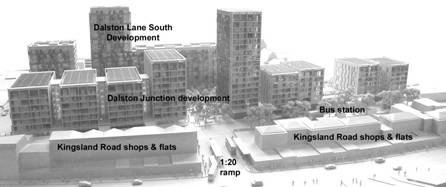
OPEN has previously made representations to the Secretary of State that the proposed development, involving the £39 million concrete slab, was a profligate use of financial and natural resources and would destroy Dalston's heritage buildings and character and blight the area. However the Secretary of State refused to intervene because, it was said, the re-development was essential to the Olympic infrastructure for 2012.
How it was -
How it could have been - restored as part of a new housing and railway station development.
"These buildings represented the heart and soul of Dalston. We believe they represented both the past and the future of Dalston’s prosperity. We wanted to see them restored so that we could show our grandchildren how Dalston used to be and so they could share our pride in our heritage and identity."
How it is today - destroyed by Hackney Council with the approval and agreement of Transport for London, the Greater London Authority and the Secretary of State.
The Vandals: an eastern Germanic tribe which earned notoriety by sacking Rome in the 5th century but which was defeated by the Goths.
Vandalism: the gratuitous anti-social destruction of the environment and artistic creations.
Municipal vandalism: the destruction of our cultural heritage by corporate ignorance, deliberate neglect, vanity and greed all in the name of progress.
How did it happen?
Read the posting "The story that was never told" for a more detailed history.

Tuesday, 22 May 2007
Greater London Authority mugs Hackney. Dalston blighted.


Friday, 13 April 2007
Local artists comment on the authorities vision
Local artists have also added their comments to TfLs "artist impression" of its proposed tower block development (left click to see the images bigger)

<


Friday, 23 March 2007
Municipal vandals have destroyed our children's heritage
The municipal vandals have completed the demolition of Dalston's heritage buildings. They have destroyed the earliest surviving circus entrance in England. This 1886 entrance, with its stepped parapet and Corinthian pilasters, was described as "extremely rare" by the Theatres Trust and as "altogether quite delightful" by English Heritage. It was an urban gem.
The philistines have also destroyed the 1898 entrance to Dalston Variety Theatre, built forward from the circus entrance, and which for 33 years was the home of Newton Dunbar's legendary reggae and soul music club, The Four Aces, and became a second home to international black musicians.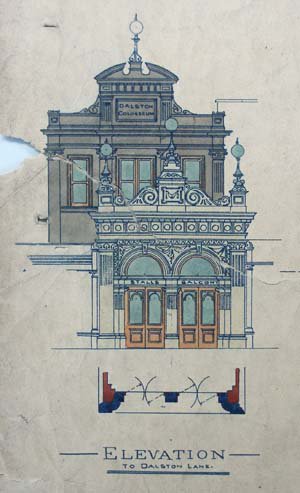
Gone too are the locally listed Georgian houses next door,the earliest in Dalston Lane, which the Council's policy was to "preserve and enhance", and which made up this unique group of historic buildings.
Also destroyed forever is the Dalston Theatre, where Hackney's own international music hall star Marie Lloyd worked and which Compton MacKenzie's father managed. The magnificent interiors became the jewel in Dalston's crown in 1920 when it was converted, at enormous expense, into a cinema. In its final years the Theatre became the home of the Labyrinth Club.
Hackney Council acquired these heritage buildings in 1977 and their destruction began in 1995 when it declared the Theatre a development site. The Theatre's roof was removed, the occupiers evicted, the buildings were boarded up and they ran to ruin whilst the Council awaited offers from developers.
The demolitions have been financed by the London Development Agency, with the agreement and approval of Transport for London and the Greater London Authority.
The government refused to intervene. The authorities said that redevelopment of the site with tower blocks, and children living up to the 20th floor, was essential to finance New Dalston's transport interchange as part of the 2012 Olympic infrastructure. The Council will give TfL the profit from the sale of its site to meet the £39 cost of a concrete slab for a bus station above the rail station
These buildings stood as landmarks in our lives and in the lives of Dalston's previous generations. Since April 2005 OPEN has fought to save something of the site's 185 year diverse cultural history. We informed and worked with the community, we sought to persuade the authorities through consultation, petitions, planning objections and personal contacts. We obtained four Court injunctions to stay their hand. But the forces of municipal vandalism had made up their minds long before the public consultation started and have now achieved their objectives.
The Vandals: an eastern Germanic tribe which earned notoriety by it sacking Rome in the 5th century but which was defeated by the Goths.
Vandalism: the gratuitous anti-social destruction of the environment and artistic creations.
Municipal vandalism: the destruction of our cultural heritage by corporate ignorance, deliberate neglect, vanity and greed all in the name of progress
Hackney Council and Transport for London now have plans to complete the demolition and Croydonisation of the remainder of Dalston Junction. The writing is on the wall.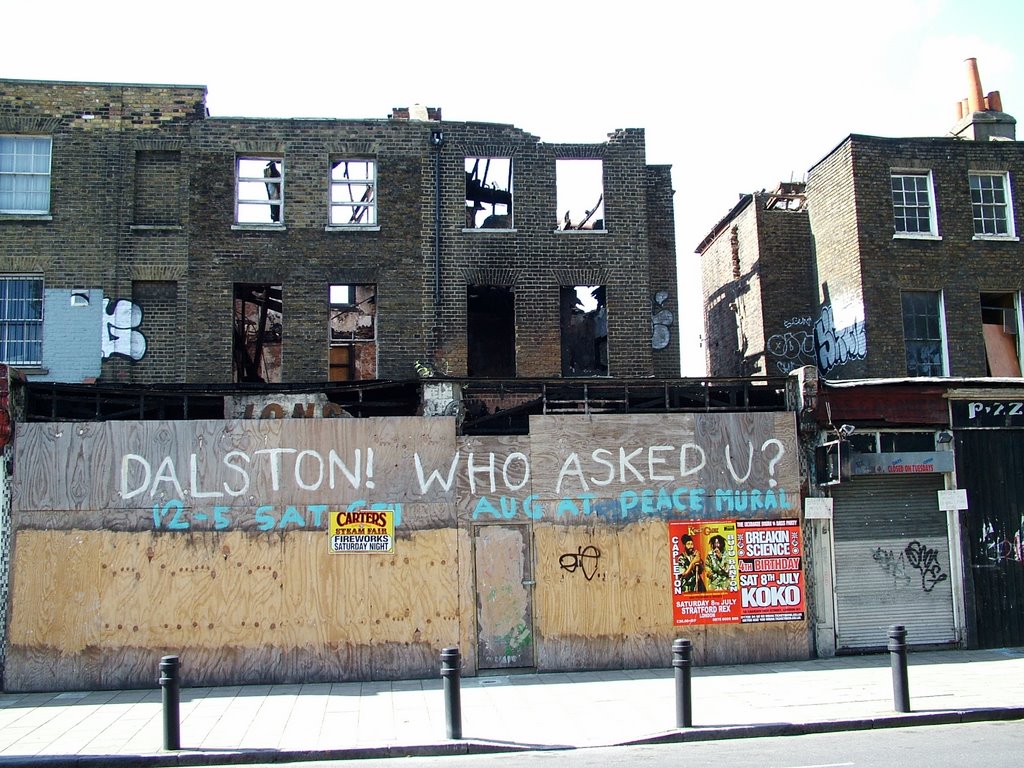
“Con”
noun: a complicated confidence trick planned and executed with great care;
verb: to deprive of by deceit;
colloquial: abbreviation of consultation
How did this happen? Read the posting
"The story that was never told" for a more detailed history.
Thursday, 22 February 2007
Hackney rips the heart out of Dalston
"There is absolutely no doubt, based on my experience, that (these buildings) can be satisfactorily brought back to a situation where they can be reused. My experience suggests that repair will not be excessively expensive."
Brian A Morton MBE C.Eng MICE Dip Conservation(AA) IHBC Structural Engineer to Canterbury and Bury St Edmunds Cathedrals and the Spitalfields Trust
How it could have been - restored as part of a new housing and railway station development.
"[These buildings] represent the heart and soul of Dalston. We believe they represent both the past and the future of Dalston’s prosperity. We want to see them restored so that we can show our grandchildren how Dalston used to be and so they can share our pride in our heritage and identity."
Ridley Road Market Traders Association
How it is today - destroyed by Hackney Council with the approval and agreement of Transport for London, the Greater London Authority and the Secretary of State.

Noun: the natives or inhabitants of ancient Philistia
Adjective: those who pursue only material gain and who place no value on beauty, culture or artistic creations;
Philistinism: the vandalism of our heritage and culture as justified by institutional policy.
How did this happen ? See the posting "The story that was never told".
Wednesday, 14 February 2007
Hackney destroys its local listed buildings

The destruction of the Dalston Theatre continues. The rear of the original circus entrance, with its 1886 arch under which elephants may have passed to enter the circus ring, has now been revealed. The Theatres Trust advised that this 1886 entrance is “important both architecturally and historically...actually very rare because it pre-dates all of the surviving British examples”. But the Theatres Trust letter of objection was not shown to the Planning Committee and the Council’s report advised that these buildings are “ not of such merit architecturally or from the point of view of historic interest to warrant retention”.
Now the Council’s contractors have also ripped the back off 10 Dalston Lane, one of the earliest surviving Georgian buildings in Dalston Lane, and which is "locally listed". The Council's policy is to "retain and enhance" such locally listed buildings. The Council’s most recent policy statement, in September 2005, claimed “Most buildings in Hackney are not listed but many are of group value and have particular historical associations or are cherished local landmarks. The Council is committed to keeping such buildings wherever possible and views them as an asset for regeneration and for their relevance to diverse local communities”. However the Council did not consider the possibility of retaining any of these buildings as part of the new development.
Wednesday, 7 February 2007
The destruction of Dalston Theatre has begun
"We are championing the historic environment and using the Borough’s heritage as a key component of economic regeneration... " Hackney Council, September 2005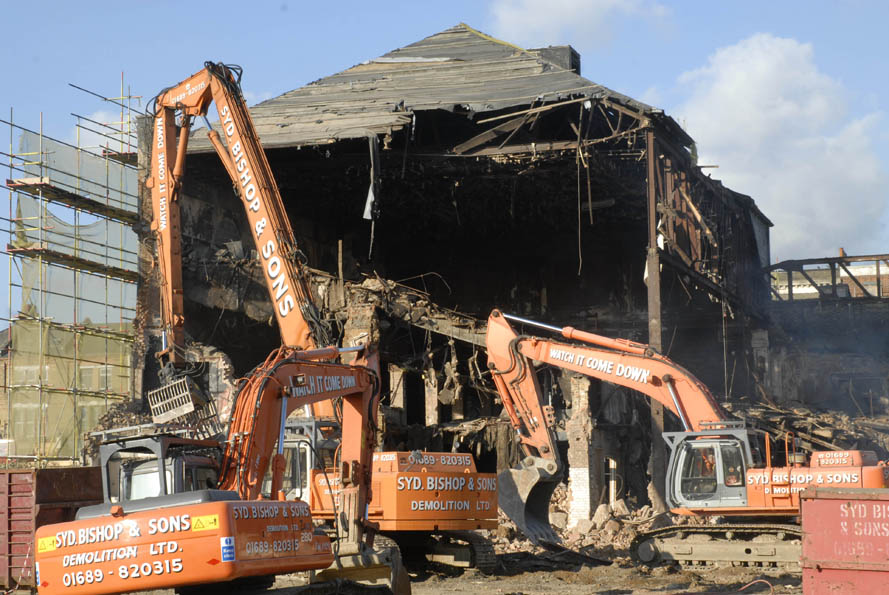
Independant environmental consultants, White Young Green, advised the Council "...given the strength of local public feeling towards the site, the nature of the development and the loss of the theatre building in particular...a more detailed analysis of alternative development schemes considered for this site would be helpful...". The Council did not consider any alternative to demolishing these buildings.
English Heritage commented in June 2005 "..parts of the site have a strong historic character...These should be retained where possible and used positively to inform new patterns of development and reinforce the areas character and identity..". The Council officer's report to the Hackney Committee said that English Heritage had not commented.
Ken Livingstone's London Plan prescribes 50% affordable housing in new developments. Hackney Council's Planning Brief for the site prescribed 50% affordable housing and a maximum of 12-15 storeys. The new developments here will have only 24% affordable housing, towerblocks of up to 20 storeys and with families with children living up to the top floor.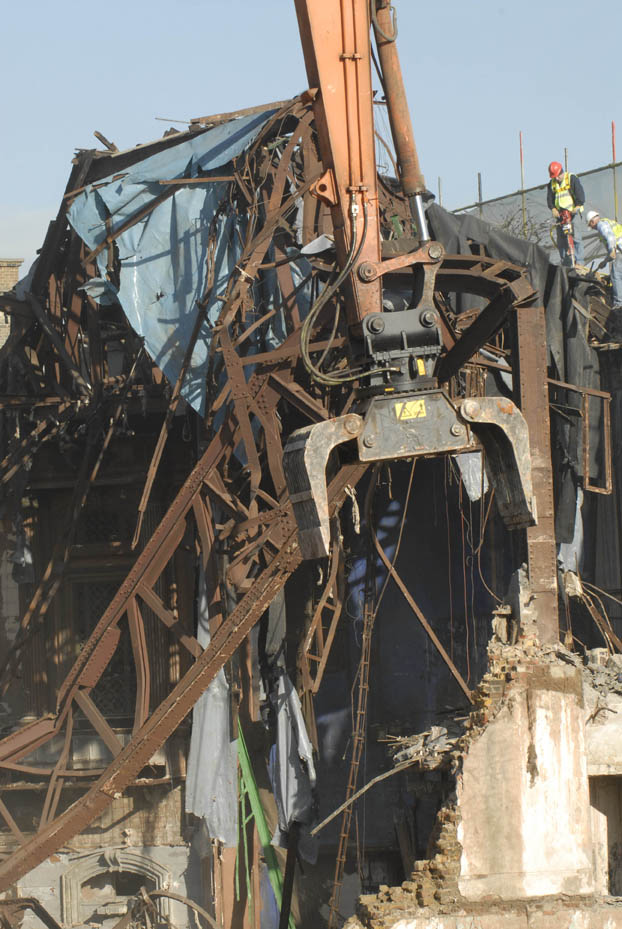
The Council's property consultants, Drivers Jonas, stated that "Throughout the project it has been the intention of the client group (ie the landowners Hackney Council and Transport for London) that any land value arising from the Dalston Lane south proposals would contribute to the extraordinary costs of construction of the slab". In other words,they had decided before the public consultation started that Dalston's heritage buildings were to be demolished to pay for TfL's £39million new bus station which is to be built over Dalston station. That cost works out at over £2million per bus stand and Dalston being blighted.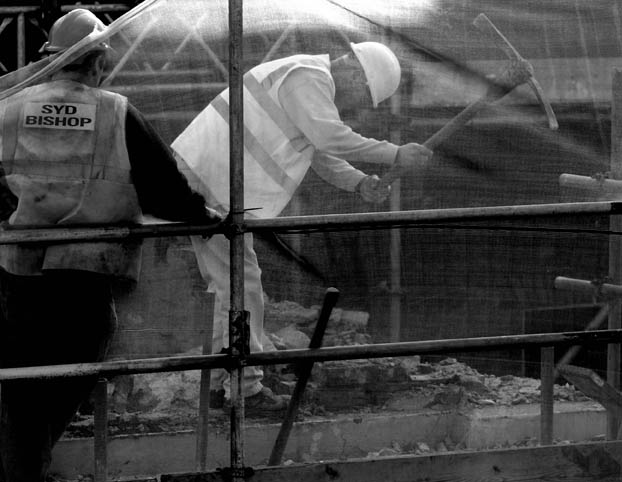
The Council's own architects, Arup Associates Ltd., had proposed in their Environmental Impact Assessment report that an event be held to celebrate the history of Dalston Theatre before its demolition. OPEN had made a similar proposal to the Council. These suggestions have been ignored by the Council. There has been no event to celebrate this building's service which has been to provide public entertainment and performance arts in Dalston for over 120 years.
For a more detailed history of this site, please see the posting below "The story that was never told"
All photos are the copyright of Mike Wells
+44 77 99 152 888
Wednesday, 6 December 2006
Hackney prepares for demolition
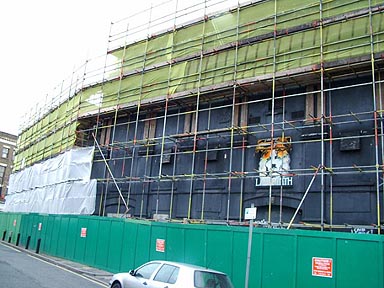
and for the Four Aces Club

and it looks like curtains for the oldest surviving circus entrance in England
where Sir Robert Fosset's circus performed in its first season 1886


The Council is finally to achieve its objective. In 1995 the Council declared the Dalston Theatre a site for redevelopment. In 1997, despite a petition of 25,000 signatures and 12 deputations, the Council still decided to evict the Four Aces, Labrynth and community organisations from the buildings so that it could sell the site to a developer. The development didn't materialise. Then in 2003, after the buildings had remained boarded up and on death row for 5 years, the Secretary of State gave outline approval on appeal for their demolition and redevelopment. Since December 2005 OPEN has obtained court injunctions to stay the Council's hand and urged the authorities to consider reusing at least some of the buildings. But the decision to fund New Dalston's Olympic bus station, by demolishing historic Dalston and selling the land for towerblock developments, had already been taken before the recent public consultation started. The Council, the Greater London Authority and the Secretary of State have refused to change the plans. Next they will implement the demolition plans for Dalston Lane north. All these decisions have contributed to the planned destruction of old Dalston.
The Philistines
Noun: the natives or inhabitants of ancient Philistia
Adjective: those who pursue only material gain and who place no value on beauty, culture or artistic creations;
Philistinism: the vandalism of our heritage and culture as justified by institutional policy.